France 24
| Total Responses: | 18 |
| Average Quality Score: | 63.6 |
| Average Bias Score: | 3.2 |
| gen: 2026/09/18:18:48 in 37.0 secbias: 3 (Unknown) |
| type: colorquality: 45 |
| pts: 0 |

#politics#war#diplomacy#iran#trump#iran war#donald trump#barack obama#us presidency#national securit
Leftist
Yet another disastrous consequence of unchecked power. The Trump administration's aggressive stance on Iran risks not just regional peace but global stability. Diplomacy should always triumph over reckless showmanship. This isn't just about jeopardizing a political career; it's jeopardizing lives. When will we learn that war isn't the answer? We need leaders who prioritize humanity over hubris, fostering dialogue over division.
Rightist
This is a classic case of fearmongering from the left. The Trump administration is taking strong steps to ensure national security. Liberals may call it jeopardizing, but it's about protecting American interests and showing strength against adversaries like Iran. Sometimes, peace requires power. It's time to stop apologizing for America and start safeguarding our future. Trump’s decisive actions show the world we won’t back down.
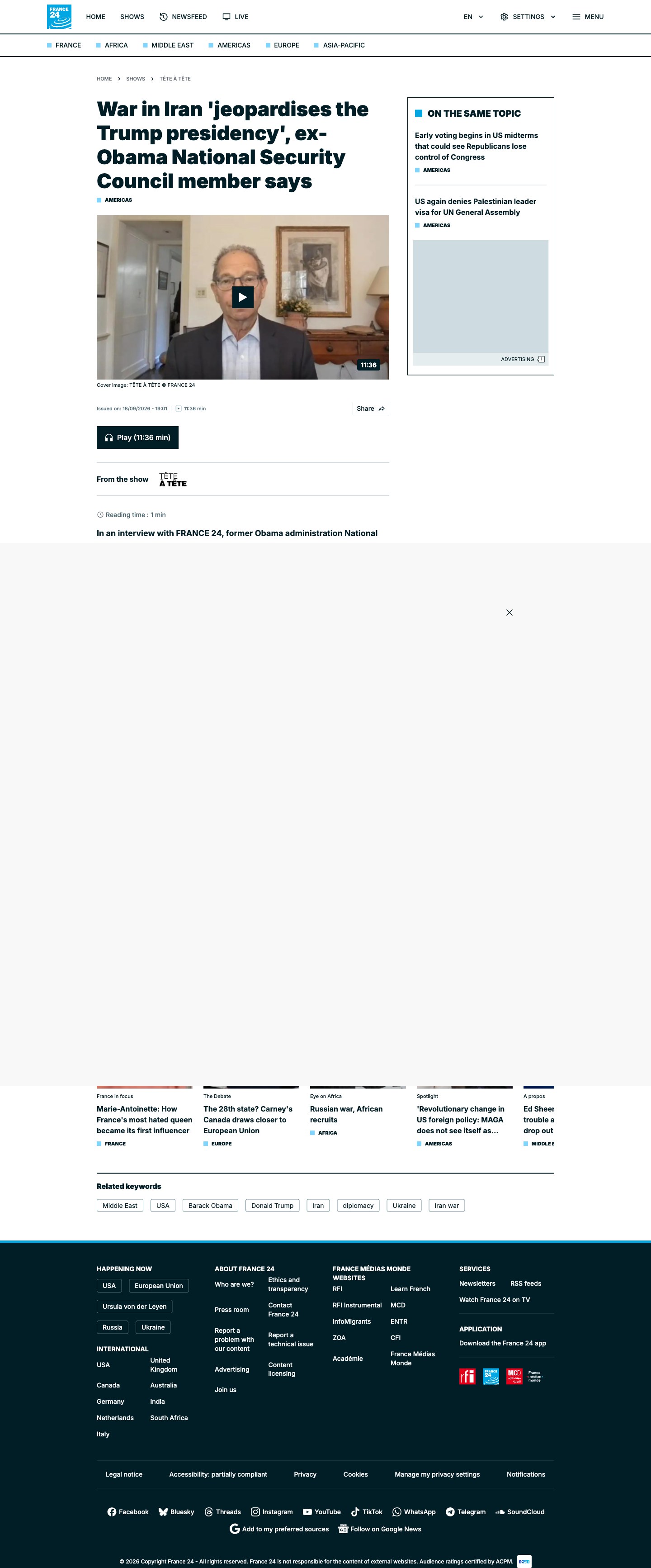 | author: | Unknown | institution: | France 24 | ¿porque no los dos? |
| tl;dr | The visible France 24 page previews an interview with a former Obama administration National Security Council member who argues that war in Iran jeopardises Donald Trump’s presidency. The headline presents this as the guest’s assessment, not an established outcome. Most of the article text is obscured, and the interview itself cannot be assessed from these screenshots. | ||||
| deeper: | The headline foregrounds a dramatic prediction from one former administration official, giving the visible coverage a narrow perspective. However, quotation marks and explicit attribution distinguish opinion from fact. Criticism of Trump alone does not establish a left–right position. The page supplies publication details and an interview format, but the obscured text prevents evaluation of evidence, questioning, context or competing views. The quality score applies only to the material visible here. | ||||
media: | |||||
| gen: 2026/09/13:15:28 in 32.1 sec (old)bias: 1 (Center) |
| type: newsquality: 40 |
| pts: 0 |

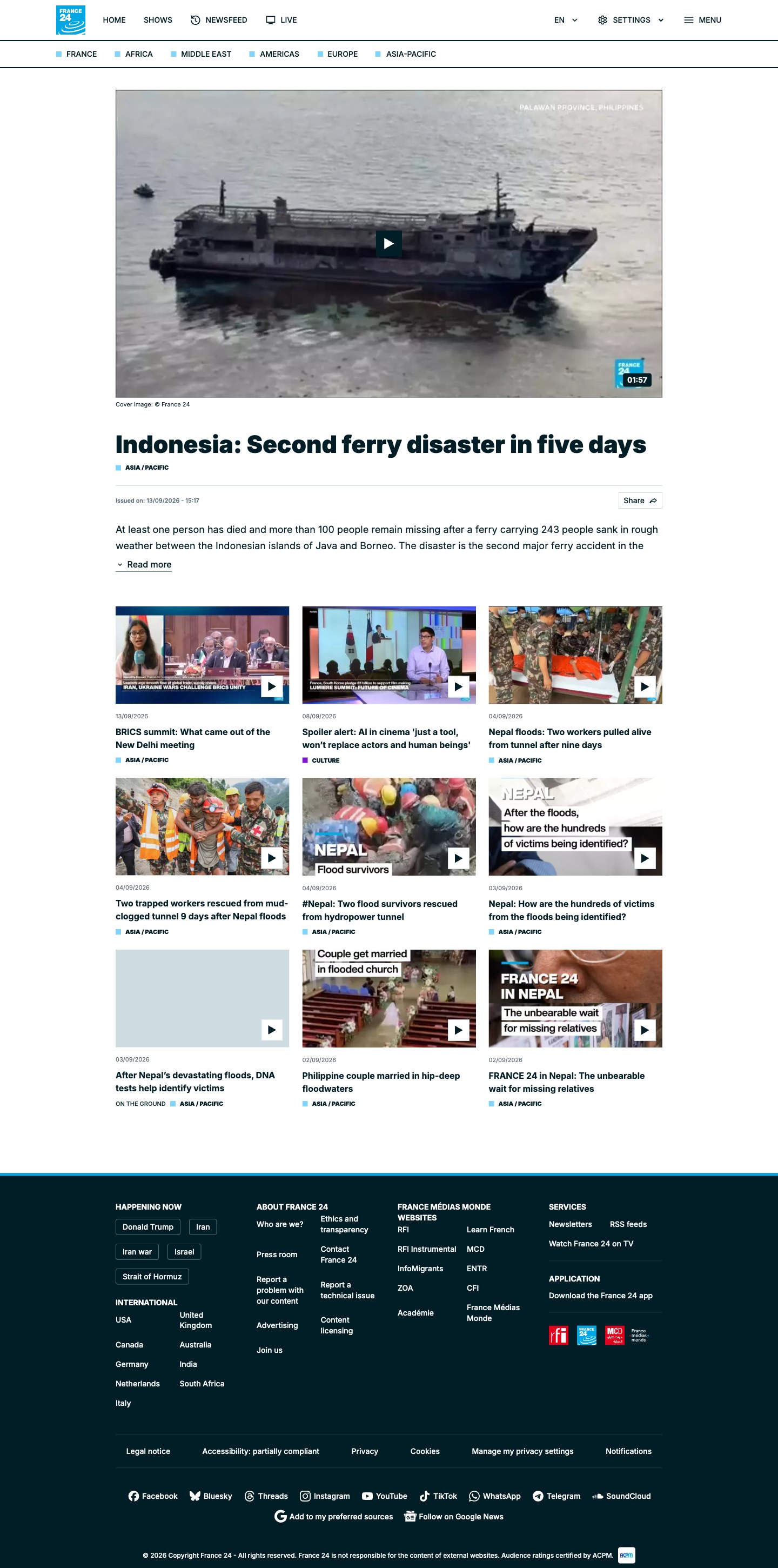 | author: | Unknown | institution: | France 24 | ¿porque no los dos? |
| tl;dr | The visible report says a ferry carrying 243 people sank in rough weather between Java and Borneo, leaving at least one person dead and more than 100 missing. The headline describes it as Indonesia’s second ferry disaster in five days. Only a short introduction is readable; the accompanying video thumbnail is labeled Palawan Province, Philippines, which does not match the reported location. | ||||
| deeper: | The visible wording is straightforward disaster reporting, with no clear political slant or assignment of blame. However, the casualty figures have no visible source, the ferry is not named, and the earlier accident is not explained. The Philippines-labeled thumbnail conflicts with the Indonesian story and could mislead readers. This assessment covers only the visible excerpt, not the unplayed video or hidden article text. | ||||
media: | |||||
| gen: 2026/09/11:15:43 in 31.8 sec (old)bias: 3 (Center) |
| type: newsquality: 68 |
| pts: 0 |

#europe#politics#elections#extremism#diplomacy#luc frieden#luxembourg#european union#ukraine#united states#diplomacy ha
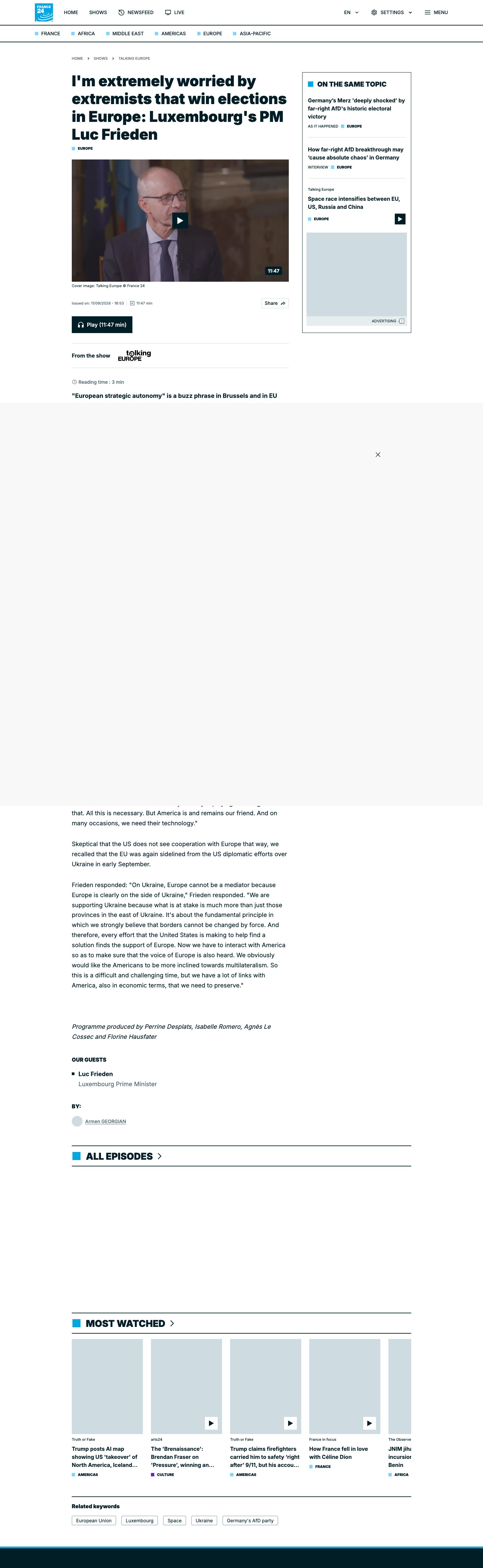 | author: | Armen Georgian | institution: | France 24 | ¿porque no los dos? |
| tl;dr | Luxembourg Prime Minister Luc Frieden warns about extremists winning European elections. In the visible interview excerpts, he supports Ukraine, argues that borders must not be changed by force, and advocates preserving economic and technological ties with the United States. The interviewer questions whether Washington treats Europe as a genuine diplomatic partner. Frieden calls for Europe's voice to be heard while maintaining transatlantic cooperation. Much of the article's middle section is obscured in the supplied images. | ||||
| deeper: | The visible text emphasizes European cooperation, multilateral diplomacy and transatlantic ties—positions spanning the political center. The emotionally charged headline is clearly attributed to Frieden rather than presented as the reporter's judgment. Direct quotations and a skeptical question provide useful firsthand reporting, but the excerpt largely conveys one leader's perspective without independent corroboration. A repeated attribution suggests minor editing weakness. These scores are provisional because substantial text is obscured and the video cannot be assessed from screenshots. | ||||
media: | |||||
| gen: 2026/09/09:15:24 in 43.9 sec (old)bias: 4 (Center-Left) |
| type: newsquality: 72 |
| pts: 0 |

 | author: | Unknown | institution: | France 24 | ¿porque no los dos? |
| tl;dr | A France 24 report says 12 countries—including Britain, Canada and France—plan to sanction trade with Israeli settlements in the West Bank, citing rising attacks by settlers against Palestinians in the occupied territory. The page includes a short video clip and a brief summary paragraph framing the move as a response to increased settler violence. | ||||
| deeper: | The language is mostly straightforward and event-focused, but it frames the rationale primarily through “increasing attacks by settlers against Palestinians” and uses the term “occupied territory,” which signals a particular legal/political framing and may omit Israeli government/settler arguments or counterclaims in the visible excerpt. Quality is solid for a headline brief from a major outlet, but the screenshot lacks details: which 12 countries, what specific sanctions, definitions of “settlements,” evidence for the increase in attacks, and any responses from Israel or affected businesses. | ||||
media: | |||||
| gen: 2026/09/09:15:21 in 42.7 sec (old)bias: 2 (Center) |
| type: newsquality: 55 |
| pts: 0 |

 | author: | Unknown | institution: | France 24 | ¿porque no los dos? |
| tl;dr | A France 24 page/headline reports that Iran said it fired ballistic missiles at a US base in Jordan early Wednesday, describing it as retaliation for US strikes on Iranian tankers. The visible page is mostly the headline, timestamp, and a short standfirst; the remainder of the article text is not shown in the provided images. | ||||
| deeper: | The framing is largely straight-news: it attributes key claims (“Iran said…”, “in retaliation…”) and avoids loaded language in the limited visible text. However, only a small excerpt is available, with no sourcing detail, corroboration, casualty/damage reporting, or competing accounts from the US/Jordan, which limits verification and overall informational value in this capture. | ||||
media: | |||||
| gen: 2026/09/08:17:08 in 41.3 sec (old)bias: 4 (Center) |
| type: newsquality: 72 |
| pts: 0 |

 | author: | Unknown | institution: | France 24 | ¿porque no los dos? |
| tl;dr | A France 24 “live” Middle East update reports that Israel plans to close the British consulate in Jerusalem, framing the move as a response to UK sanctions related to Israeli settlements. The page features an AFP photo of an Israeli soldier near a newly established settlement outpost near Beit Sahur, labeled as in the occupied West Bank, reinforcing the settlement-focused context of the story. | ||||
| deeper: | The headline is largely straight, cause-and-effect framing (“after sanctions”), but the choice of photo and caption language (“occupied West Bank,” “newly established … outpost”) foregrounds a specific legal/political framing that many governments and the UN use, while others contest parts of it—this can tilt perception without being overtly polemical. Quality is solid for a breaking-news/live item (clear headline, timestamp, AFP image credit), but the provided excerpt lacks the article body, sourcing details, and competing quotes that would let readers fully assess claims and motives. | ||||
media: | |||||
| gen: 2026/08/28:05:10 in 41.4 sec (old)bias: 2 (Center) |
| type: newsquality: 74 |
| pts: 0 |
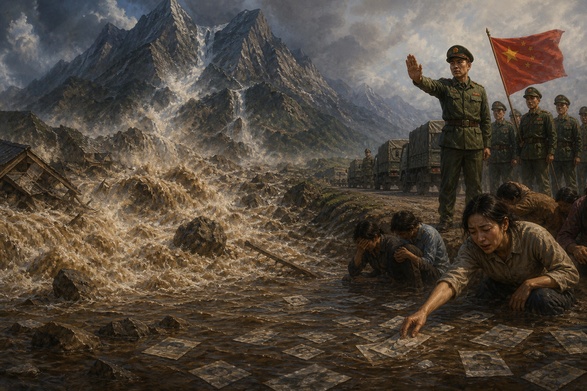
 | author: | Unknown | institution: | France 24 | ¿porque no los dos? |
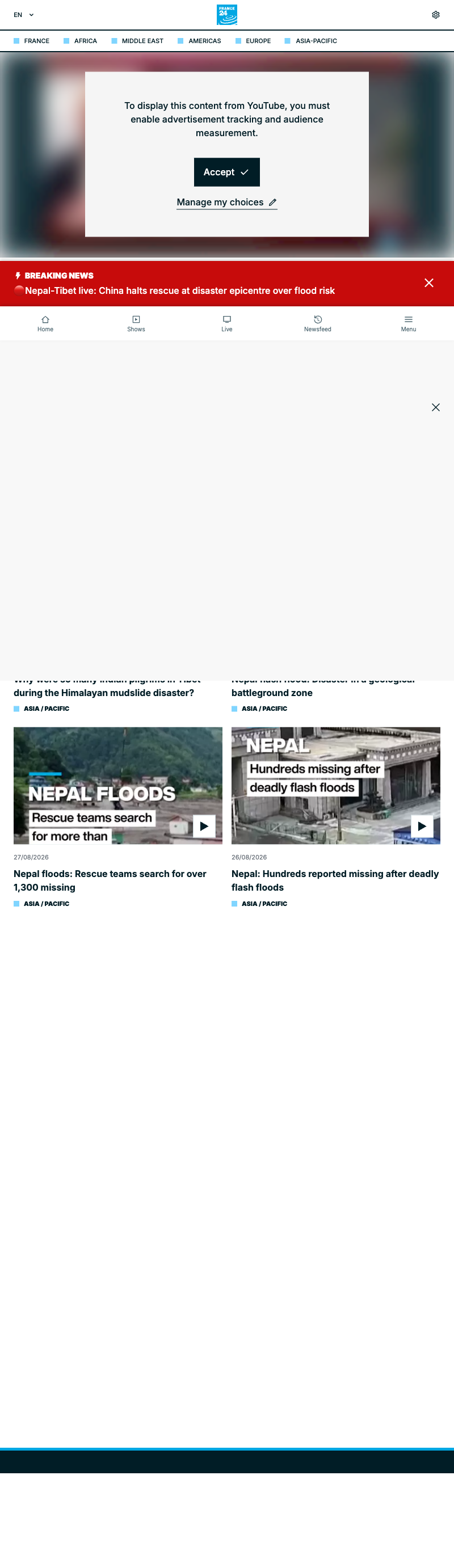
| tl;dr | The image shows a France 24 news page focused on severe flooding/flash floods affecting Nepal and the Nepal–Tibet region. A breaking-news ticker states: “Nepal-Tibet live: China halts rescue at disaster epicentre over flood risk.” Linked items highlight large-scale search-and-rescue efforts and high numbers of missing people (e.g., “over 1,300 missing” and “hundreds missing”). Much of the page is obscured by a YouTube consent prompt, limiting access to the full live article text. | ||||
| deeper: | The visible content is largely straight, event-driven disaster reporting (rescue operations, flood risk, missing persons) with no obvious loaded language or ideological framing. Potential bias is minimal and mostly arises from headline selection and emphasis (breaking-news urgency, casualty/missing counts) without showing underlying sources or methodology in this screenshot. Quality appears solid for a mainstream outlet, but the page is partially blocked by a consent overlay, and there’s not enough visible text to assess sourcing, attribution, or corrections in detail. | ||||
media: | |||||
| gen: 2026/08/22:18:54 in 43.9 sec (old)bias: 4 (Center-Left) |
| type: newsquality: 63 |
| pts: 0 |
 | author: | Unknown | institution: | France 24 | ¿porque no los dos? |
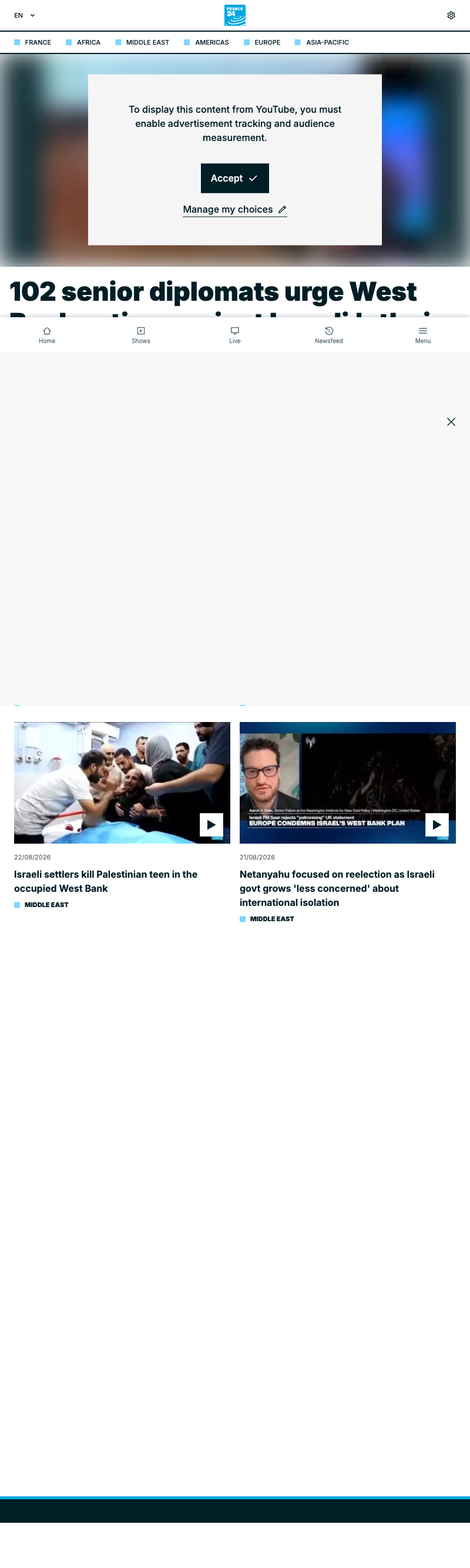
| tl;dr | The image is a France 24 news page focused on Israel/Palestine coverage. The visible headlines include: “Israeli settlers kill Palestinian teen in the occupied West Bank” (22/08/2026), “Netanyahu focused on reelection as Israeli govt grows ‘less concerned’ about international isolation” (21/08/2026), and a clip noting “Europe condemns Israel’s West Bank plan.” A larger, partly obscured headline reads “102 senior diplomats urge West …,” but the rest of the article is not visible. | ||||
| deeper: | Bias signals are mild and mostly come from framing and word choice: repeated emphasis on West Bank condemnation, “occupied West Bank,” and “settlers kill” foregrounds Israeli actions and international criticism. “Occupied West Bank” is widely used in diplomatic/UN contexts, but it still communicates a legal-political stance. Quality looks decent for a mainstream outlet, but the screenshot hides the main article’s body, sources, and countervailing perspectives, so it’s hard to assess evidence, attribution, and completeness. | ||||
media: | |||||
| gen: 2026/08/22:18:51 in 35.1 sec (old)bias: 4 (Center) |
| type: newsquality: 55 |
| pts: 0 |
| gen: 2026/08/13:04:37 in 2 min 51.8 sec (old)bias: 4 (Center) |
| type: lolsquality: 60 |
| pts: 0 |
| gen: 2026/08/10:02:38 in 3 min 48.9 sec (old)bias: 4 (Center) |
| type: lolsquality: 62 |
| pts: 0 |
 | author: | Unknown | institution: | France 24 | ¿porque no los dos? |
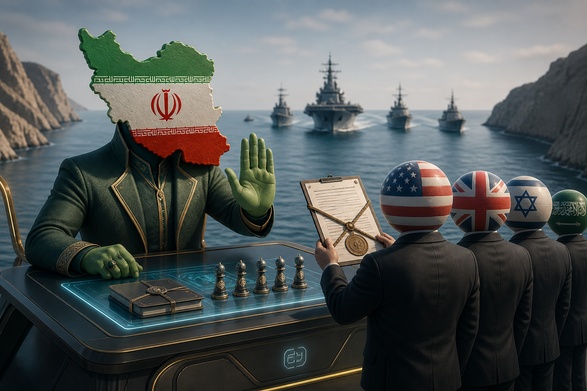
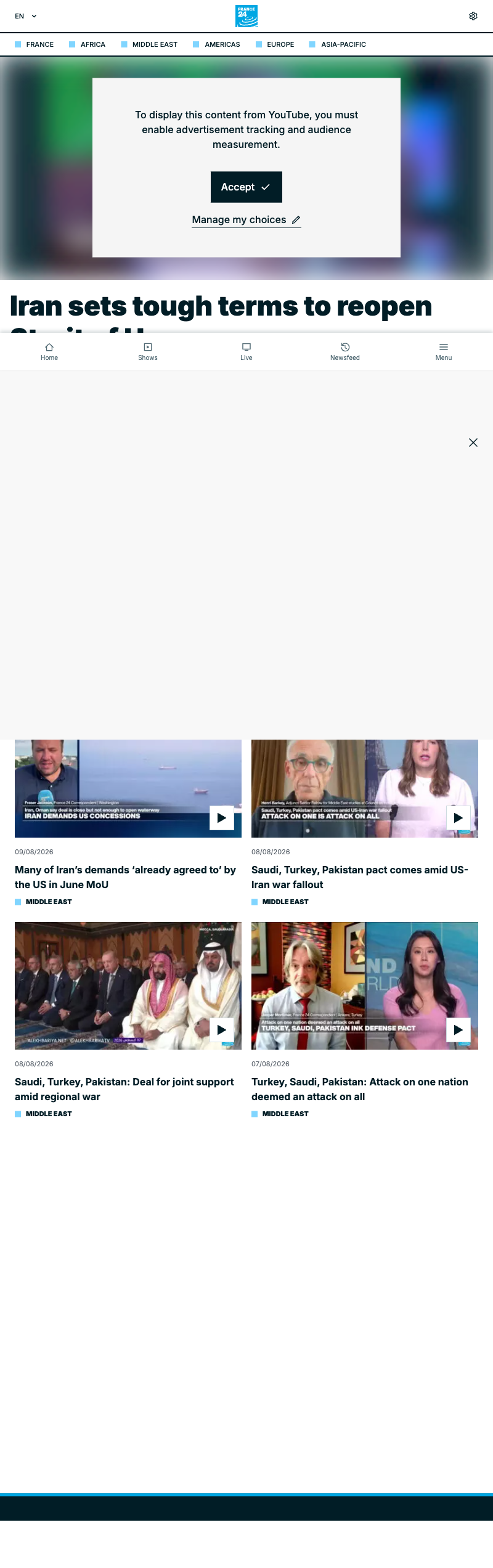
| tl;dr | The image shows a France 24 news page focused on Middle East coverage. The main visible headline reads “Iran sets tough terms to reopen …” (the remainder is cut off), with related video items about Iran demanding concessions and a Saudi–Turkey–Pakistan pact framed as fallout from US–Iran conflict dynamics. A cookie/YouTube tracking consent pop-up blocks much of the primary story text, limiting what can be verified from the screenshot alone. | ||||
| deeper: | France 24’s presentation appears largely straight-news, but wording like “tough terms” and “demands” can subtly prime readers toward a confrontational frame. The screenshot provides headlines and thumbnails but little sourcing detail (no quoted officials, documents, or context visible) because the consent overlay blocks the article/video content. Quality is therefore moderate: reputable outlet and clear topic labeling, but the available evidence here is incomplete and headline-driven. | ||||
media: No Media Preview | |||||
| gen: 2026/08/08:22:49 in 2 min 52.1 sec (old)bias: 4 (Center-Left) |
| type: lolsquality: 78 |
| pts: 0 |

 | author: | Mélodie Sforza; Aruna Popuri; Constantin Simon; Théo Collet | institution: | France 24 | ¿porque no los dos? |
| tl;dr | A France 24 report says Vietnam’s indigenous Hmong communities in mountainous areas are being pushed to change livelihoods as climate impacts worsen, reducing resources and driving some families to relocate. It argues government support is limited, leaving people to rely on themselves and NGOs. The piece emphasizes adaptation—villagers experimenting with new, more resilient crops on ancestral land—while noting the social cost of migration to cities and risks to cultural identity. | ||||
| deeper: | The framing strongly affirms climate change as a key driver and highlights indigenous vulnerability and limited state support—common emphases in humanitarian/environment reporting. Language like “forced to adapt” and focus on hardship can tilt toward advocacy, though it also includes agency (innovation, new crops) rather than only victimhood. Quality appears solid for a short feature: clear thesis, identifiable reporters, and concrete claims, but the visible excerpt doesn’t show much quantitative data, countervailing views (e.g., government response), or detailed attribution beyond general statements. | ||||
media: No Media Preview | |||||
| gen: 2026/08/04:14:37 in 53.0 sec (old)bias: 2 (Center) |
| type: newsquality: 55 |
| pts: 0 |

| gen: 2026/08/04:05:26 in 48.8 sec (old)bias: 3 (Center) |
| type: newsquality: 72 |
| pts: 0 |
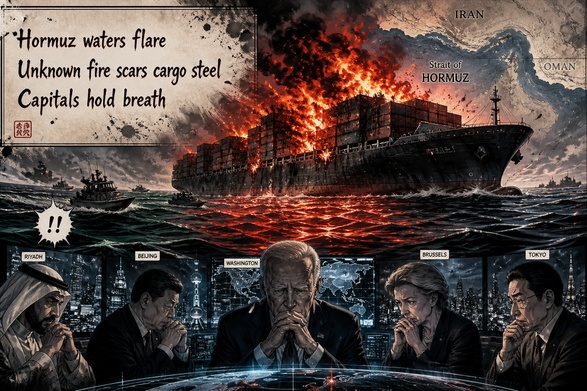
#middle east#shipping#conflict#diplomacy#france24#straitofhormuz#cargo_ship#projectile#iran#israel-gaza_wae?
| gen: 2026/07/31:16:19 in 1 min 11.3 sec (old)bias: 3 (Center) |
| type: newsquality: 62 |
| pts: 0 |
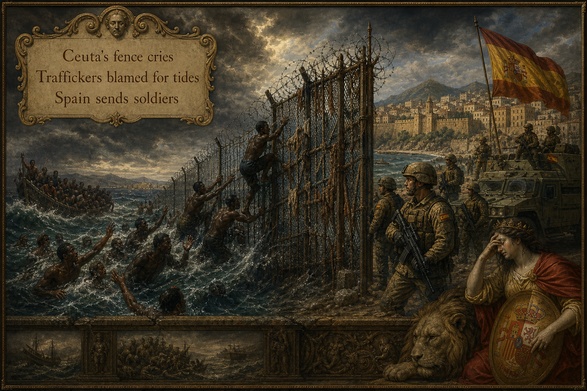
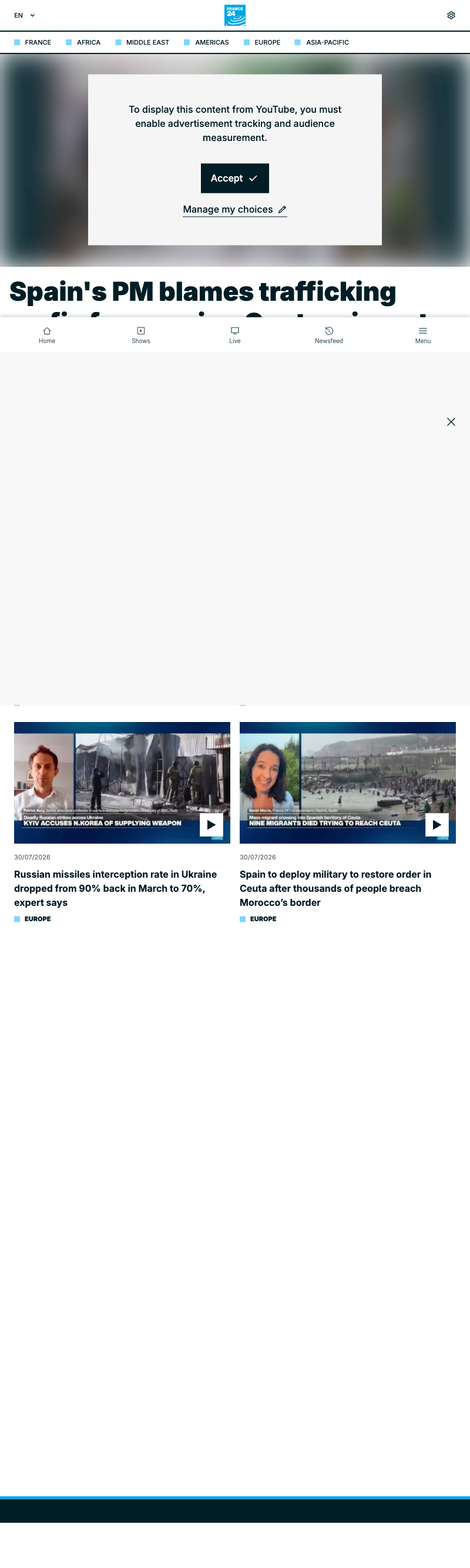 | author: | Unknown | institution: | France 24 | ¿porque no los dos? |
| tl;dr | The image is a France 24 webpage dominated by a consent pop-up blocking a YouTube embed. The visible headline begins “Spain's PM blames trafficking…,” suggesting a story about migration and border pressure, likely tied to Spain’s North African enclave Ceuta. Below, two France 24 video tiles are visible: one about Ukraine missile interception rates, and another about Spain deploying the military in Ceuta after thousands breached Morocco’s border and migrant deaths. | ||||
| deeper: | The screenshot provides limited readable article text (a cookie/YouTube tracking prompt obscures most content), so the substance can’t be fully evaluated. What is visible uses standard, event-focused language (“deploy military,” “thousands,” “died,” “blames trafficking”) that can heighten urgency but is common in breaking-news framing. No clear evidence of one-sided editorializing appears in the visible portion, but the lack of context, sources, and full details in the image lowers assessable quality. | ||||
media: No Media Preview | |||||
| gen: 2026/07/30:05:23 in 3 min 26.0 sec (old)bias: 3 (Center) |
| type: lolsquality: 62 |
| pts: 0 |
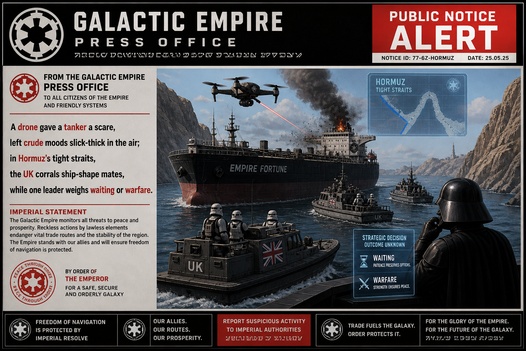
#middle-east#drones#oil#shipping#hormuz#france24#middleeast#droneattack#oilstorage#tanker#maritimesecuri1t
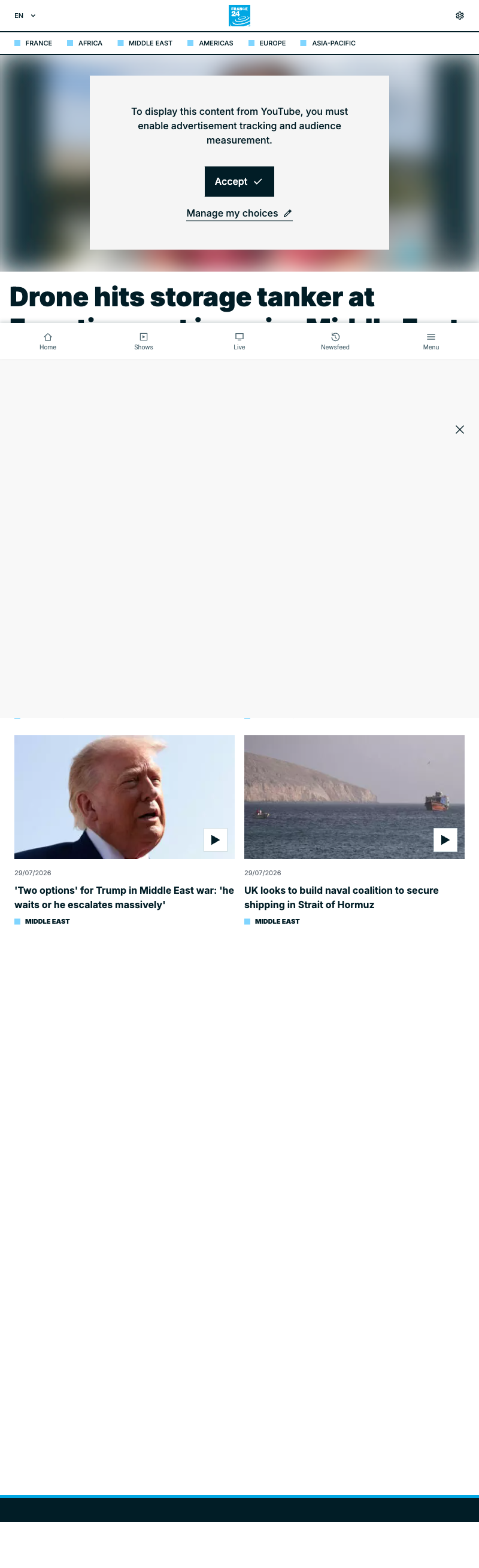
| gen: 2026/07/28:04:36 in 40.3 sec (old)bias: 2 (Center) |
| type: newsquality: 78 |
| pts: 0 |
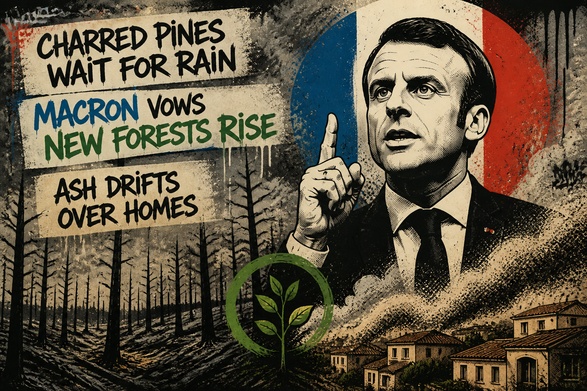
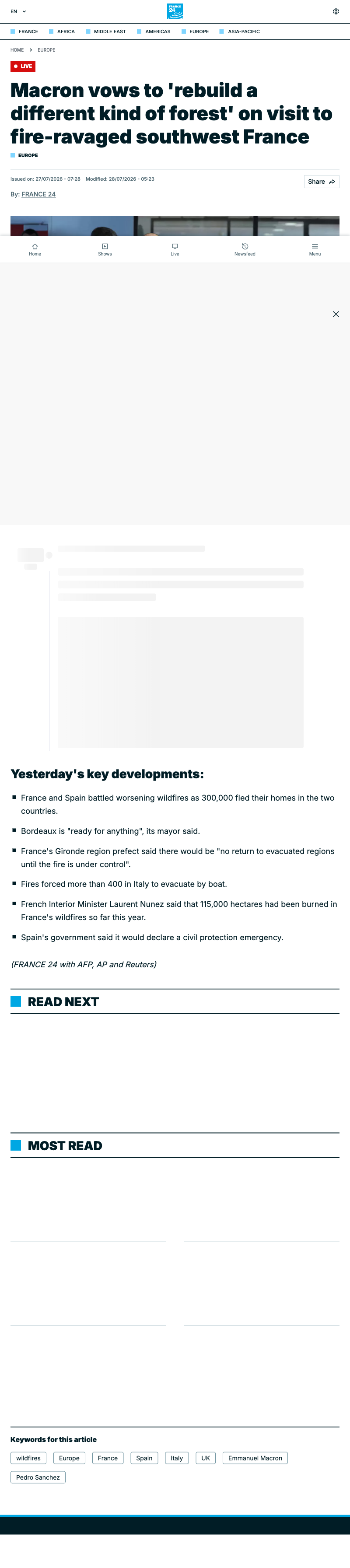
| gen: 2026/07/24:13:10 in 1 min 33.1 sec (old)bias: 6 (Center-Left) |
| type: newsquality: 72 |
| pts: 0 |
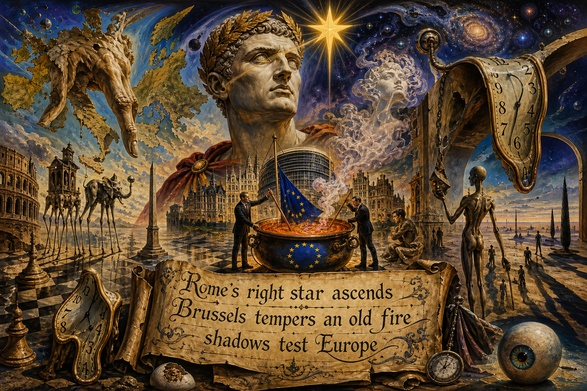
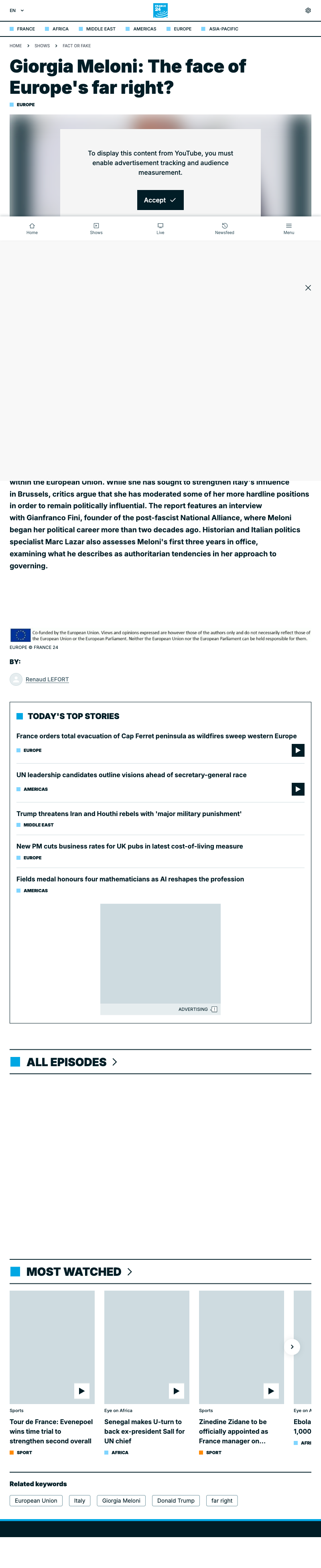 | author: | Renaud Lefort | institution: | France 24 | ¿porque no los dos? |
| tl;dr | A France 24 piece asks whether Italian Prime Minister Giorgia Meloni has become the leading figure of Europe’s far right. It frames her as a politician with roots in post-fascist politics whose government has shown what the article calls authoritarian tendencies, while also noting arguments that she has moderated some hardline positions and remains influential in EU politics. The report leans on interviews (including with a founder of a post-fascist party) and expert commentary to assess her first years in office and her role in Brussels. | ||||
| deeper: | Bias: The headline (“The face of Europe’s far right?”) is a loaded framing choice that primes readers toward a particular interpretation and treats a contested label (“far right”) as the organizing lens. The visible text emphasizes criticism—post-fascist roots, “authoritarian tendencies”—while giving some space to the counter-claim that she has moderated positions. Overall, the piece appears more prosecutorial than neutral, but not purely polemical. Quality: The article looks like a reported analysis segment rather than an evidence-heavy investigation. It cites interviews and specialist commentary (historian/political specialist), which supports credibility, but the on-page excerpt doesn’t show much direct sourcing (e.g., specific policies, voting records, legal texts, quantitative indicators) that would let readers independently evaluate claims like “authoritarian tendencies.” As presented, it’s solid explanatory journalism with a strong frame, but limited transparent evidentiary detail in what’s visible. | ||||
media: No Media Preview | |||||
You made it to the bottom. Now dance!


owned and operated by: RPN Omnigalactic Insitutution as of: 2026/10/14: 17:31 in 0 ms
Enter Code
Login with Account